
4WD impacts on our beach and dune systems are an ongoing issue, one that has been recently highlighted for our WA coast in an ABC Landline piece featuring WACMN members Mic Payne (NACC) and Nic Dunlop (WA Fairy Tern Conservation Network).
The Landline feature provided a measured, informative, well reported piece presenting a sound scientific argument for reduction and regulation of 4WD vehicle use on sandy coasts. Importantly, the programme recognised the significance this type of beach access in our connection and enjoyment of our coastal and marine areas and raised really interesting questions about ongoing, widespread, indiscriminate use, especially in areas currently experience erosion and inundation which will likely be exacerbated in the future with impacts from climate change. Rather than vilify 4WDs, the show presented a sound argument for behavioural change backed by tighter regulation to allow us all to enjoy our amazing coastal and marine environment for many years to come.
Tending the Track: Wanagarren Track Success Story an inspiration for elsewhere
Stopping in Lancelin, Ailbhe had the opportunity to meet with Alison Goundrey (Tending the Track Alliance) and Nic Dunlop in person to discuss their previous work on the Wanagarren track and their ongoing advocacy for more sustainable 4WD use along our fragile coastal ecosystems
“4WD use is a part of our coastal culture here in WA,” says Nic Dunlop.
“So it’s imperative that we look at sacrificial areas where we can regulate and control impacts while at the same time protecting and rehabilitating fragile systems that are often important breeding grounds for a range bird, plant and animal species.”
“We really need to work together as a State to raise awareness (of environmental impacts) and focus on education (to improve environmental stewardship of 4WD users),” says Alison.
“It’s amazing what can be achieved when we actively, and adaptively manage our impacts along designated tracks,” she says, citing the amazing success story of the Wanagrren track from Grey to Wedge Island.
Environment Minister Stephen Dawson opened the 16km Wanagarren Track in January 2020. The previously unregulated off-road hotspot has been developed by 4W drivers and conservation volunteers in collaboration with the Department of Biodiversity, Conservation and Attractions (DBCA). It now features 15 campgrounds in the Jurien Bay Marine Park in Wanagarren Nature Reserve that must be booked online and are managed by DBCA.
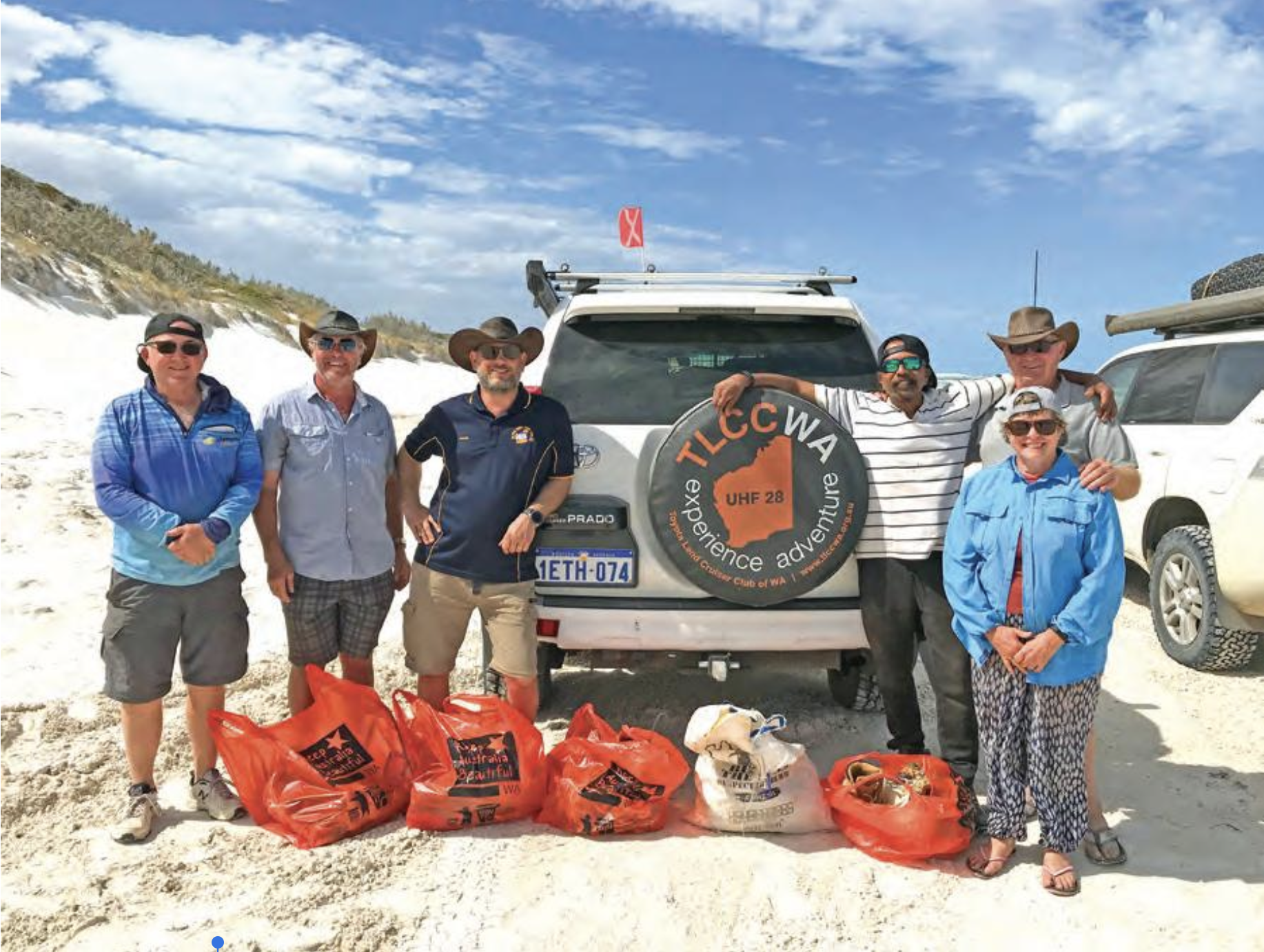
Following on from the 2020 opening, DBCA continue to maintain the track and have sought volunteer assistance with necessary management activities. In response to this call for assistance, under the guidance of the Toyota LandCruiser Club of WA (TLCCWA) a volunteer program was developed to assist DBCA rangers with management and maintenance of the tracks while enjoying their usage.
“The success of this track now managed by DBCA provides a perfect example of what could be achieved elsewhere in the state if there’s the local appetite and political will to make it happen,” Alison says.
This sentiment was echoed in a later conversation with Robyn Jacob (former president of the Seabird Progress Association) who said that there was a “definite interest to explore similar managed track projects in the area, including the Seabird to Guilderton Track” while acknowledging potential barriers that exist with respect to access and land ownership.


Tending the Wanagarren Track (photo credit: Track Care)
Turquoise Coast 4WD Master plan exploring innovative solutions
Moving up the coast to Jurien, Ailbhe called in on Anthony Seymour, currently working on a Coastal Recreation Tracks Master Plan for the Shires of Dandaragan, Gingin and Coorow.
“Working as the focal point on a project across a large management area gives the opportunity to think about an important issue for our coastline across local government boundaries and involving multiple stakeholders and agencies,” says Anthony.
“4WD use on the coast is a contentious issue with many different opinions both for and against. People need to understand that unless we figure out ways to balance recreational use of 4WDs in coastal areas with environmental sustainability, the future use of vehicles by
everyone on the coast may be affected,” he says.
Anthony cites difficulties in managing environmentally sensitive areas without public support because they are often so remote and resources and staff to ensure compliance are lacking.
“Often users of the coast are not from the local area and don’t have the same sense of stewardship and custodianship as the people living there, and on the flip side, often people living in an area have grown up having access to the beach and dunes along the coast and may want that to continue.”
“We need to map current tracks, how they are being used and where, as a start point,” Anthony says.
“Then we need to identify where we need to consolidate tracks, where we
might need to map out preferred tracks, and, where we might need to close and rehabilitate.
“We need better capacity to monitor and manage environmentally sensitive areas as well as provide education for 4WD users to help us all to continue to sustainably use the coastal zone.”
Anthony is currently looking at innovative ways to monitor 4WD usage in remote dune areas and has recently completed a public survey to gain community feedback on 4WD usage across the Turquoise Coast with over 300 respondents providing their views. Results from
the survey will assist in developing the Master Plan.
City of Greater Geraldton finding the balance between coastal protection and community use
The conversation on 4WD impacts continued in Geraldton at a meeting of the Batavia Coastcare Network attended by local community group representatives, NACC and the City of Greater Geraldton. Mike Dufor (Manager Climate, Environment and Waste, CGG) shared some insight into the success stories from Point Moore and other Geraldton erosion ‘hotspots’ where 4WD had been prohibited or limited to allow beach and dune recovery and stabilisation.

The City of Greater Geraldton has been dealing with pronounced erosion along much of its coastline over a number of years. With four erosion hotspots around the town site at Sunset Beach, Drummond Cove, Beresford and Point Moore, the need to adopt an approach to protect fragile beach/dune environments, reducing risk to assets and maintaining public access and utility has been a key priority.
Point Moore has been a particular public concern and a management focus for CGG given the ongoing loss of shoreline threatening the Marine Rescue club and forcing closure of public toilet facilities.
Initial beach closures allowed a level of recovery along reaches of the shoreline leading to the City adopting a balanced approach to protecting and managing the environment while still providing vehicle access to Point Moore beaches. The approach involves meeting the needs of all users by restricting vehicle access to the beaches when the conditions are unsuitable or unsafe and repairing the degraded sand dunes.
The decision was informed by feedback the City received from nearly 800 community members in the Point Moore Beach Usage Survey and Information Session held in September 2021 where the vast majority of respondents said protecting the environment was important and that visitors to the area need to look out for and respect one another in a space shared by pedestrians and motorists.
The City currently restricts access when beaches are too narrow to drive on so people don’t hurt themselves, endanger pedestrians or damage the sensitive coastal dune system.
Restricting vehicle access to beaches when conditions are unsuitable is not a new idea for the City which has also managed the Seacrest Way track in Drummond Cove with a boom gate since 2019.

Batavia Coastcare Network promoting education for behaviour change
City of Greater Geraldton reinforced their commitment to awareness raising and community education with respect to sustainable 4WD usage of their coastal zone through support of an info-graphic designed by Dave O’Meara (Batavia Coastcare Network).
“The purpose of the graphic is to illustrate the positive outcomes for beach and dune ecosystems when 4WD access is restricted’ says Dave. “We’re really excited to have support from CGG on this and we look forward to sharing with our coastal communities in WA and around the State more widely once finished.”


Track Care WA joining the Conversation as Environmentally Concious 4WD users at our Coastal Conference
Andrew Seymour, Alison Goundrey, Nic Dunlop and Mic Payne will be attending WACMN’s Coastal Conversations 2024 state-wide event in Perth on October 18th where they will participate in a 4WD focused ‘breakout’ session to discuss a ‘pathway forward’ for sustainable use of the beach and dune systems along our coasts for all. They will be joined by Track Care WA Chair Graham Weber who looks forward to sharing his experience as an environmentally conscious 4WD enthusiast as one of our key theme speakers on the day.